Key takeaways
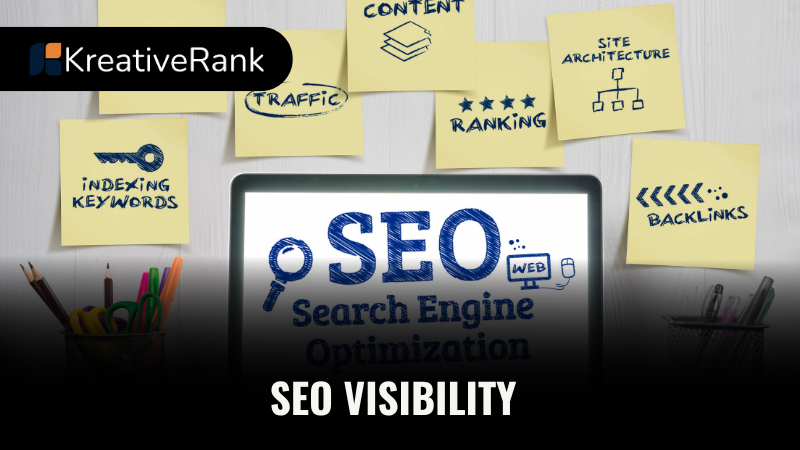
- SEO services cover on-page optimization, technical SEO, link building, and content, all working together to improve your search visibility.
- The global SEO services market is valued at $83.98 billion in 2026, and the businesses investing in it are generating a median ROI of 748%.
- In 2026, Google's AI Overviews, zero-click searches, and E-E-A-T signals have changed how rankings work. Strategy matters more than ever.
- Organic search drives 53% of all trackable website traffic, outperforming paid ads, social, and email combined.
- A well-executed SEO campaign generates leads at $31 per lead versus $181 per lead from PPC.
Most business owners understand that they need to “show up on Google.” Fewer understand what it actually takes. SEO services are the structured work, done consistently, that makes that happen. This guide breaks down what those services include, what they cost, and what you should expect in return.
What are SEO services?
SEO services are professional activities designed to improve a website’s visibility in organic search results. The goal is straightforward: when your target customers search for what you offer, your website appears, and they click through.
These services include technical audits, keyword research, on-page content optimization, link building, and performance reporting. A reputable provider, like KreativeRank, ties all of these together into a coordinated strategy rather than executing them in isolation.
The key word is organic. Unlike paid search ads, organic rankings do not require a payment each time someone clicks. Once your pages earn their position, traffic compounds over time without incremental spend.
Why do businesses invest in SEO services in 2026?
The numbers are clear. Organic search accounts for 53% of all trackable website traffic across industries, and SEO leads close at a 14.6% rate compared to just 1.7% for outbound marketing. For B2B companies specifically, organic search drives 44.6% of total revenue.
The cost difference between SEO and paid advertising is also significant. Organic leads cost an average of $31 each. PPC leads average $181 each. That gap compounds over months and years.
At the same time, 61% of small businesses are not yet investing in SEO. That gap is an opportunity for the businesses that are.
What does an SEO service actually include?
On-page SEO
On-page SEO refers to everything done on your own website to improve rankings. It starts with keyword research & Strategy identifying exactly what your customers type into Google, what intent sits behind those searches, and where your content currently stands.
From there, optimization covers:
- Title tags and meta descriptions written to match search intent.
- Header structure (H1, H2, H3) organized around target topics.
- Internal linking between relevant pages across your site.
- Content depth that answers the full scope of a user's question.
- Image alt text, URL structure, and schema markup.
This is the layer most people associate with SEO, and it matters. Businesses focusing on on-page SEO see a 32% higher ROI from their organic traffic compared to those who skip it.
KreativeRank’s on-page SEO service covers the full scope of this work, from initial audit through to content production and implementation.
Technical SEO
Your content cannot rank if Google cannot crawl and index your website correctly. Technical SEO addresses the infrastructure that sits beneath your content.
Key areas include:
- Site speed and Core Web Vitals scores.
- Mobile-first indexing compatibility. Mobile generates 58% of all Google searches, so pages that perform poorly on mobile lose visibility.
- Crawlability, sitemap accuracy, and canonical tag setup.
- HTTPS security and structured data (schema markup).
- Fixing broken links, redirect chains, and duplicate content.
Technical issues are often invisible to the site owner but visible to Google. Addressing them removes the obstacles that suppress rankings regardless of how strong the content is.
Link building
Google treats backlinks, links from other websites to yours, as votes of confidence. Pages with more high-quality backlinks consistently rank higher and generate more organic traffic.
The emphasis in 2026 is firmly on quality over quantity. A few relevant mentions from trusted industry publications carry more weight than hundreds of low-authority links. The Google algorithm has become much better at identifying linwhatk patterns that suggest manipulation rather than genuine authority.
Effective link building involves:
- Digital PR and outreach to relevant publications.
- Guest content on authoritative sites in your niche.
- Building assets (data studies, original research) that earn links naturally.
- Brand mention monitoring and reclaiming unlinked citations.
KreativeRank’s link building service focuses on placements that build real domain authority, not link schemes that create short-term spikes and long-term risk.
Content strategy and creation
Content is what connects your website to your customers’ searches. Without it, there is nothing to rank.
A content strategy built around SEO maps topics to search intent, covers the full range of questions a buyer asks across their decision journey, and maintains the E-E-A-T signals (Experience, Expertise, Authoritativeness, Trustworthiness) that Google now weighs heavily.
Companies publishing 16 or more blog posts per month generate 4.5 times more leads than infrequent publishers. That does not mean publishing anything. It means producing content that genuinely answers real questions better than competitors do.
AI-generated content is not automatically penalized. Thin, generic content is. The distinction matters.
Local SEO
For businesses that serve a specific geography, local SEO is its own discipline. It covers:
- Google Business Profile optimization.
- Local citation building and consistency across directories.
- Location-specific landing pages.
- Review management and response strategy.
Local SEO generates an average ROI of 700% for small businesses within 6 to 12 months, driven by the fact that 76% of people who perform a local search on their smartphone visit the business within 24 hours.
KreativeRank’s local SEO service is designed for businesses that compete in specific cities or regions rather than at a national level.
SEO reporting and analytics
Ongoing measurement is what separates a managed SEO engagement from a one-time project. Reporting should track:
- Keyword rankings over time.
- Organic traffic volume and trends.
- Conversions and leads attributed to organic search.
- Page-level performance and crawl health.
- Backlink profile growth and quality.
Vanity metrics, like raw impressions or domain authority scores in isolation, do not tell you whether the work is moving the business forward. Revenue-attributed reporting does.
How does SEO work in 2026? What has changed?
AI Overviews and zero-click searches
Google’s AI Overviews now appear for 13% of all search queries, and their presence reduces average click-through rates significantly. 60% of Google searches now end without a click, up from 58% in 2024.
This does not mean SEO is less valuable. It means the strategy requires adjustment. Pages cited inside AI Overviews gain visibility even without direct clicks, and 46.5% of the webpages that AI Overviews cite actually rank outside the top 50 organic results. Being cited depends on topical authority and clear, well-structured content, not just rank position.
The practical implication: content that directly answers specific questions, with clear structure and authoritative sourcing, earns presence in AI-generated answers. KreativeRank’s content and GEO optimization service accounts for this when building content briefs.
E-E-A-T is now a baseline requirement
Google’s E-E-A-T framework (Experience, Expertise, Authoritativeness, Trustworthiness) has become the standard by which content quality is evaluated. In practical terms, this means:
- Content written by people with genuine subject matter expertise.
- Author credentials visible on the page.
- Citations from credible external sources.
- A transparent, trustworthy website design and structure.
Sites producing generic content without demonstrable expertise lose ground. Those building around real expertise and editorial standards gain it.
Search intent alignment matters more than keyword density
Modern search engines understand language well enough that keyword repetition does not drive rankings. What drives rankings is matching the intent behind a search with content that satisfies it completely.
A user searching “how long does SEO take to work” wants a specific, honest answer. A page that hedges indefinitely or pivots to a sales pitch will not hold its ranking. A page that gives a clear timeline with context will.
How long does SEO take to show results?
Honest answer: meaningful results typically appear between 6 and 12 months, depending on the competitiveness of your niche, your site’s current authority, and the scope of work. Most SEO campaigns reach their break-even point around month 9.
50% of businesses see measurable ROI in organic traffic within the first 3 months. 70% see a significant uptick in visits and conversions within 6 months. At the 12-month mark, SEO ROI typically reaches 2.6 times the investment. At 24 months, top-performing campaigns exceed 10 times ROI.
The compounding nature of SEO is what makes it valuable. Paid ads stop delivering the moment the budget runs out. A page that earns a top ranking continues generating traffic and leads without additional spend.
How much do SEO services cost?
Pricing varies widely based on the scope of work, the competitiveness of the market, and whether you are targeting local, national, or international search.
General benchmarks for 2026:
- Small businesses typically spend $497 to $5,000 per month on SEO services.
- Mid-market businesses commonly invest $2,000 to $10,000 per month.
- Enterprise campaigns range from $10,000 to $100,000 or more per month.
The average SEO budget for SMBs is $500 to $5,000 per month according to industry data. The return on that investment, at a median of 748%, justifies the spend in most competitive markets.
KreativeRank offers SEO packages structured around the specific needs and competitive context of your business, rather than fixed-tier pricing that ignores what you’re actually competing against.
What questions should you ask before hiring an SEO service?
Before signing with any provider, get clear answers to these:
- What does your reporting look like, and how do you tie SEO work to revenue?
- Do you build links through editorial outreach or through paid placements?
- How do you handle content? Do you involve subject matter experts or rely on AI generation alone?
- What happens to the work if we stop the engagement? Do we retain ownership of content and links?
- Can you show examples of results for businesses in a comparable competitive environment?
A provider who cannot answer these clearly is not worth engaging.
Frequently asked questions about SEO services
Paid search (Google Ads, PPC) requires payment for every click. Stop paying, and the traffic stops. SEO earns organic rankings through content quality, technical health, and authority signals. It takes longer to build, but the traffic continues without incremental spend. SEO converts at a 14.6% close rate versus 1.7% for outbound paid efforts.
Yes. Organic search still drives 53% of all trackable website traffic, and the SEO services market is growing at 12% annually to reach $83.98 billion in 2026. AI Overviews create new citation opportunities for well-structured, authoritative content. The strategy has shifted, but the channel remains essential.
If your business serves a specific city, region, or has a physical location, local SEO is a core requirement. It covers your Google Business Profile, local citations, and location-specific content. 76% of local mobile searches lead to a physical visit within 24 hours, and 28% of those result in a purchase.
Track rankings for your target keywords, organic traffic volume in Google Search Console, and, most importantly, conversions or leads attributed to organic search. Rankings and traffic without revenue impact are not success. A good SEO provider connects the work directly to business outcomes in their reporting.
For basic on-page optimization and content publishing, yes. For technical SEO, competitive link building, and a coordinated strategy in a competitive niche, the complexity and time investment typically justifies working with a specialist. 74% of small businesses currently invest in SEO services, and 71% of those report being satisfied with the results.
Pro tip: Before hiring an SEO agency, run a free crawl of your site using Screaming Frog or Google Search Console. Identify your current crawl errors, page speed scores, and which pages already generate organic impressions. You’ll have a much clearer picture of what the agency’s starting point is, and whether their audit reflects what you already know.